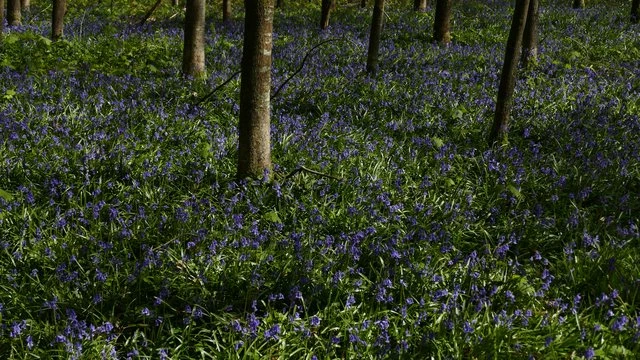
A fairylike blue carpet stretches under the still bare trees of old forests. At some moments of the day bluebells even seem to radiate the blue light, that magical is their presence. In non-Corona times bluebells are massively visited. Even buses with Japanese tourists go to Hallerbos. These days they blossom in silence, which adds to the fairy tale atmosphere.
In most places in Europe, bluebells are protected as indicators of old forest. They grow very slowly, up to an inch a year. Their large seeds fall almost next to them. Bumblebees and hoverflies are welcome pollinators, but bluebells produce up to fifteen different active substances that protect them from other insects and animals.
Their Latin name is proof of centuries of debate among botanists. They moved from hyacinths to star hyacinths and ended up with the hyacinth-like species, Hyacinthoides. Non-scripta was an invention of Carl Linnaeus, who wanted to distinguish the bluebell from the hyacinth present in Greek mythology. That hyacinth carries the white markings of the tears that Apollo shed over Hyacinthus, which he had lethally struck while discus throwing. Bluebells may not have any markings, but they do mark the soul of those who dwell in their numerous company.
Bluebell